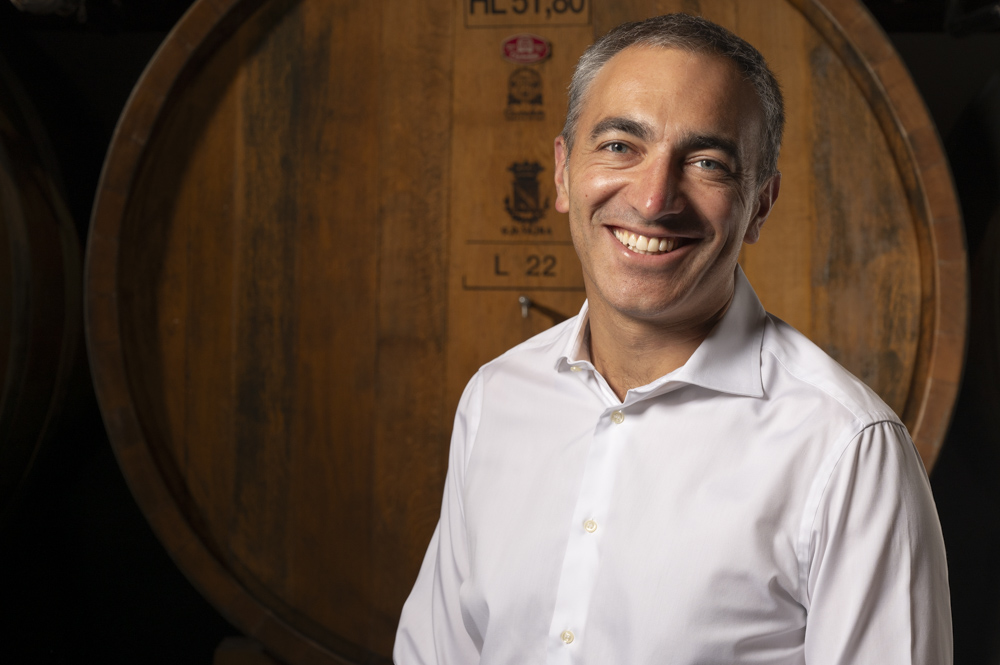
I was recently invited by my good friends at Studio Cru PR in Vicenza, Italy to join an online tasting led by Giuseppe Vaira to taste a selection of his family vines from Barolo.
Before sharing my tasting experience, let me introduce the Vaira family and an insight into their vineyards. The family owned company is G D Vajra di Aldo e Milena Vaira. They run and own 80 hectares of high elevation vineyards in the village of Barolo in the Langhe region of Piemonte.The firm has its G D from Grandfather Giuseppe Domenico who gave his son Aldo the first nucleus of the vineyards in the Bricco delle Viole. His son Aldo, wife Milena and their children Giuseppe, Francesca and Isidoro who were the pioneers of organic farming in Piedmont. Barolo went through a challenging time trying to stick to the staunch traditionalist beliefs or to become modernists adapting to the trends of earlier wine drinking favoured by a generation. For Aldo there was no doubt about the wines he wanted to make. Neither a traditionalist nor a modernist he committed to his vineyard, Bricco delle Viole. This is why he earned the title of being “the modern of the tradionalists and traditional of the modernist”.
For the Vaira family, everything is about careful selection and observation, craftsmanship, attention to detail and beauty. “Before being a team, we are a family, and in a family, to see that one’s offspring continue the work of their fathers. is in exchange for richness and mutual esteem,” declares Milena with a big smile.
Their vineyards are in different parts of the wide Barolo production area. Bricco delle Viole is the highest and westernmost holding. Its proximity to the Alpine arc, night breezes and vines over 60 years old give to this Barolo finesse and fresh aromatics. Fossati represents the highest part of the eastern slope of Bricco Vergne. Exposed to the morning sun, the Marne di Santagata Fossili provides full-body and complex wines. Coste di Vergne, La Volta and Fossati are the secrets of Barolo Albe. Blending different vineyards with balance and harmony. Ravera is one of the most composite soils with white silicates and iron rich layers interwoven to look like lasagne. Bricco Bertone stands out or the quality of its soil.
Having seen where the wines are lovingly produced, Giuseppe explains that there are not good or bad vintages. Rather is vintage is character of the year each of the harvests are grown. He explained that in 2021 frost came weeks later than 2020, with the buds flowering 16 days later than the year before. The colder weather of ’21 resulted in flowering under pressure resulting in smaller berries. August was rather dry with potassium and nitrogen being dominant. Potassium gave sustainable natural acidity. While nitrogen gave slower and longer fermentation. Wine makers a natural fear of the cold. The beauty it brings in complexity allowing for longer skin contact. Comparing the two, 2020 was fruitier. In colder 2021 we had more layers of structure
“We believe in the gentle technology, prefer fermentation to run freely we don’t want to be specific about temperature ranges,” he says. “Ideally it should never go lower than 18C. Historically my predecessors bought huge blocks of ice wrapped them in plastic sheets and plunged them into the fermentation tanks. They didn’t have the technology we have today. That was 40-50 years ago in a time when there were fewer things to see but there was greater attention to detail.”
It’s now time to taste the wines to discover what makes each of them special.
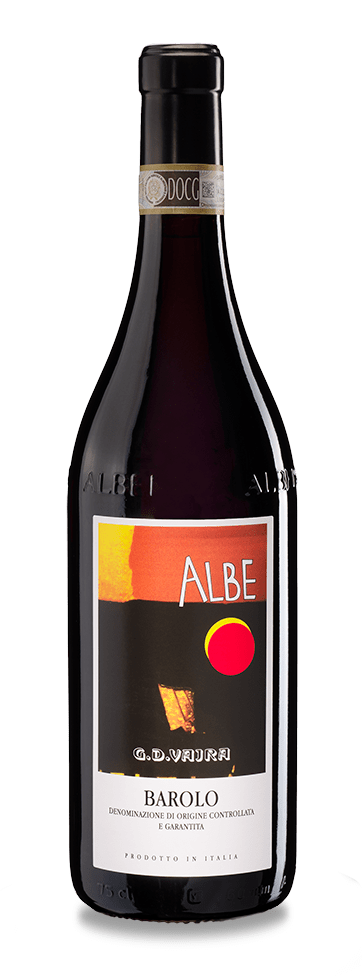
2021 Barolo DOCG Albe
Barolo is traditional with a heritage of being made from individual vineyards, often described as one of Italy’s greatest wines. In order to appeal to more modern tastes looking for fruitier earlier-drinking wines some producers began to cut fermentation times to just 10 days and age the wines in new French oak barriques. Traditionalist argue these are not Barolo wines tasting more of new oak than wine. Interesting food for thought
Giuseppe doesn’t agree with the traditionalists, he see Albe as an opportunity for younger newer wine drinkers to enjoy progressive winemaking. Some argue the price should be increased, again he disagrees. He wants to increase party for a new generation to open a bottle and to enjoy the wine. “We do have blue and superchiped wines they couldn’t afford,” he says. “This is the wine for the curious 28-31 years to have their first taste of Barolo.”
This wine was created in 2000 at the worst moment for Barolo when everything else was made from single vineyards. For the first time we made a new wine that was a reflection of harmony and the beauty for blending. This wine is made with grapes (some suggest the leftovers) from three high-altitude vineyards, Coste di Vergne, Fossati and La Volta then aged for 24 months in large oak vats.
2021 Barolo DOCG Coste di Rose
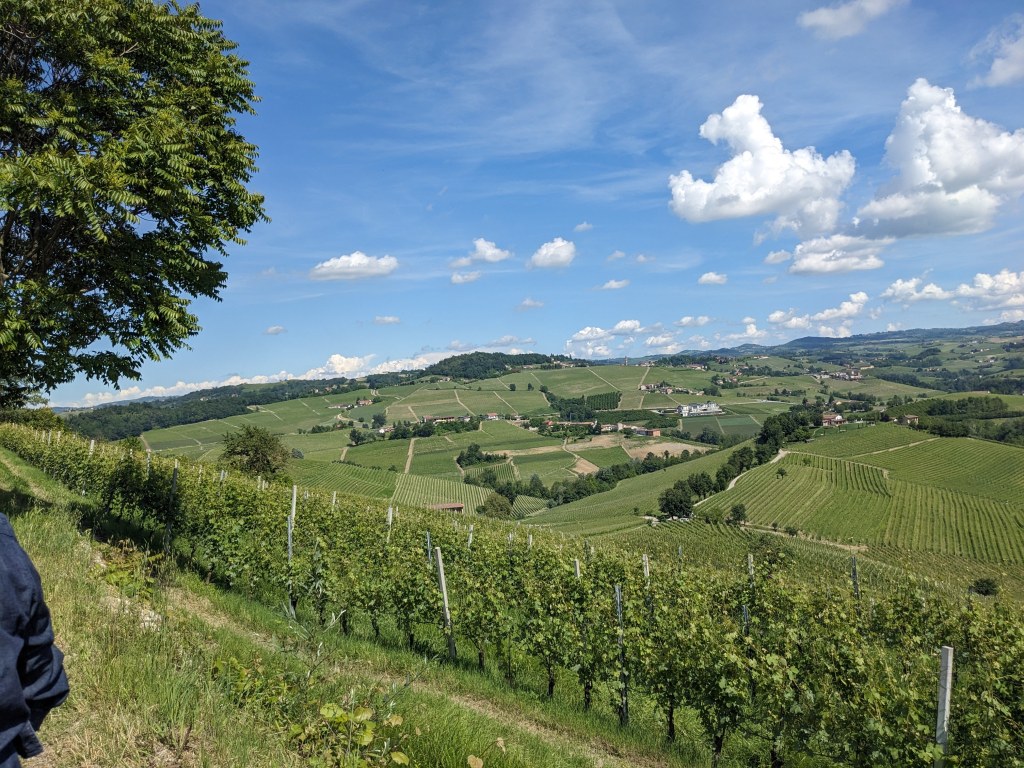
A vineyard most tourists never get to see from the observation decks. Hidden away on a steep slope rising from Bosco della Fava then descending swiftly down towards Monforte d’Alba. This sandstone dune crafts Barolos distinctive character – tones of cherry and rose petals, mint and spices, a silky tannin and a juicy sip
A vineyard most tourists never get to see from the observation decks. Hidden away on a steep slope rising from Bosco della Fava then descending swiftly down towards Monforte d’Alba. This sandstone dune crafts Barolos distinctive character – tones of cherry and rose petals, mint and spices, a silky tannin and a juicy sip.
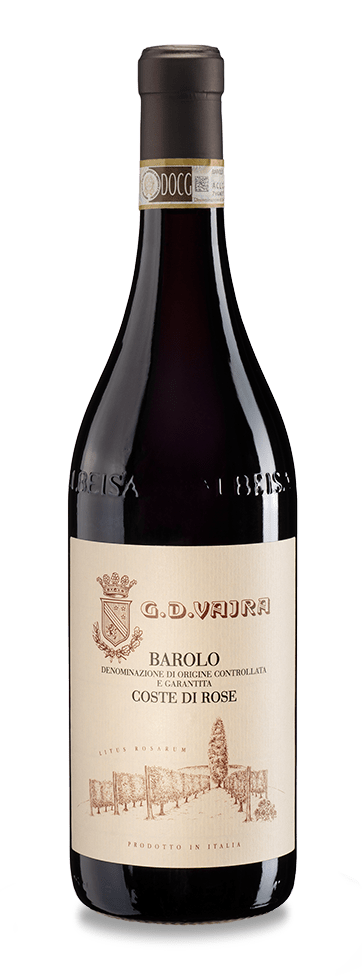
At 300m ASL it has the highest amount of soil (90%) of sand in the sol, very different from any of the other terrains. This can be seen in the slightly less colour resilience. It is the least tannic of the five wines. It’s a Sunday lunch wine.
At 300m ASL it has the highest amount of soil (90%) of sand in the sol, very different from any of the other terrains. This can be seen in the slightly less colour resilience. It is the least tannic of the five wines. It’s a Sunday lunch wine.
In 1971, Giuseppe’s father Aldo still a university student, was one of the earliest to adopt organic farming in Piemonte. Vineyards have been nurtured, and soil preserved, by grassing and spontaneous cover crop for almost 50 years now. They are sustainable and organic certified. With an incredible ratio of manual work per hectare, farming at Vajra is a labour of love and “recipe-free” attention.
2021 Barolo DOCG Ravera
“I am intrigued by Ravera’s indomitable personality,” says Giuseppe. “It is crisp like the sound of a Telecaster, straight and electric.” Ravera is recognized as the most important single vineyard in Comune di Novello. It grows on a very complex underground where marls of Tortonian origin mix with sandstones and clays of the Serravallian period. Located in the southern amphitheatre, between 300 and 380 metres above sea level.
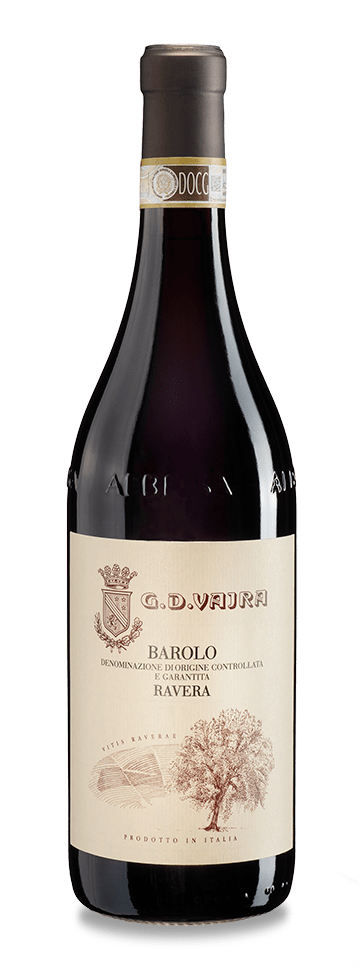
This is a vintage set to provide some world class wines. Despite a frost alert in the spring, and a few violent hailstorms during summer, the season was generally very positive, moderately dry and with late harvests. All grapes have abundance of acidity and good phenolics, and the shortage of nitrogen in the fruit allowed for some of the longest and most gentle fermentations in recent years.
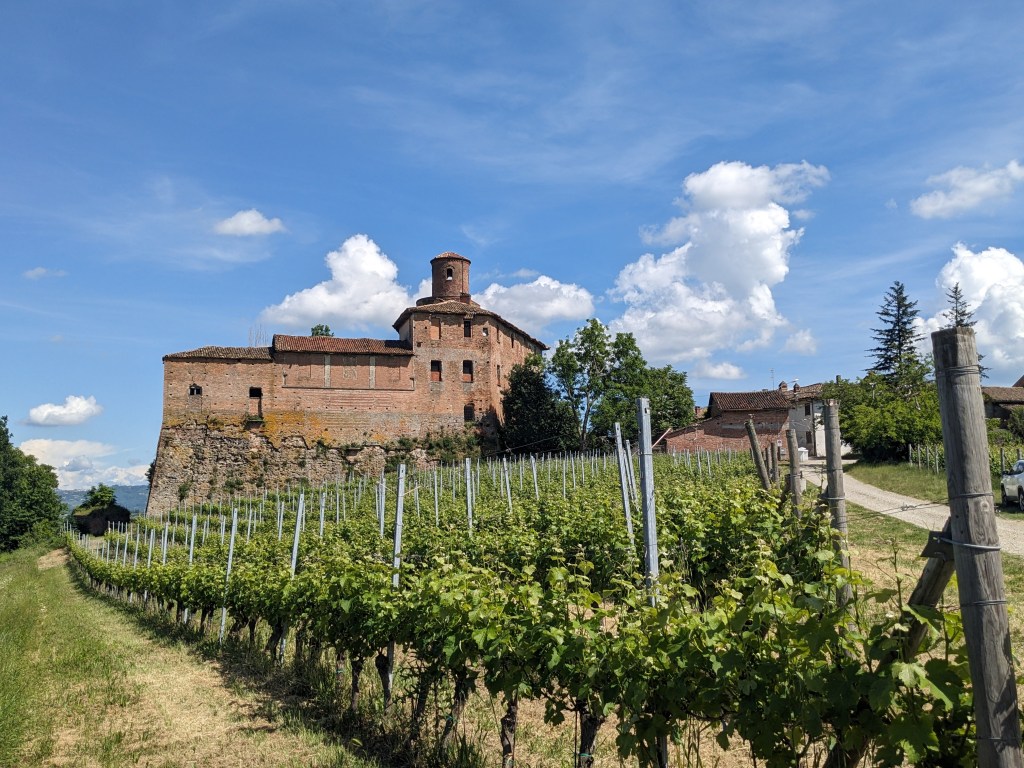
Whereas sand was the marker of the previous wine here it is iron. It is visible in the bell tower Monforte Alba, an ugly industrial brick factory building, a witness of social character of the region. When digging the soil resembled the images of an Italian Lasagne with interwoven layers of red and white soil. It’s a wine for a night when the table was not rushing.
2021 Barolo DOCG Bricco delle Viole
He described this as his Pink Floyd Wine,
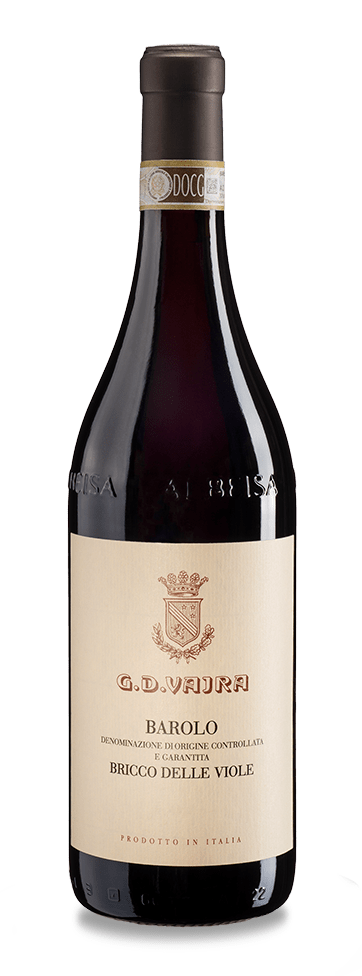
“Bricco delle Viole is the vineyard that taught us patience and naturally guided the style of our craft, said Father Aldo. The vineyard is the highest and the closest to the Alps. It rises from 400 to 480 meters above sea level, on the Western ridge of the village. Its name, “Hill of Violets”, originates from the flowers that blossom early, thanks to the perfect south exposure. Above the fog, Bricco delle Viole enjoys the earliest sunrise and the last sunset every day. Thanks to this pure light, a dramatic diurnal temperature range and the age of its vines dating back to 1931, 1949 and 1968, Bricco delle Viole generates a profound Barolo of bright aromatics, chiselled tannins and subtle mine.
Luigi Baudana
Finally, we got to discover the family’s relationship with Luigi Baudana, 2.6 hectares of vineyards in Serralunga d’Alba, an authenic garage wine. For more than thirty years Luigi and Fiorina cultivated these vineyards that had belonged to their family for five generations
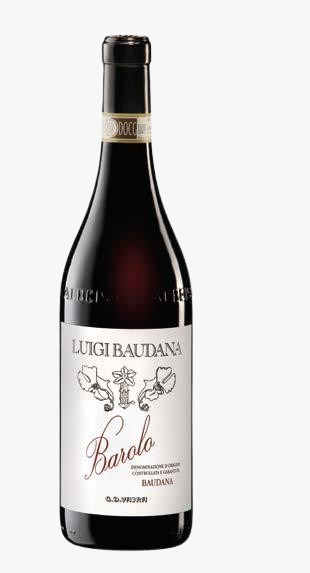
A hidden gem of the historical vineyards of Serralunga d’Alba, on the western slope, just north of Parafada and Lazzarito. Rather uniquely, the soil here is a combination of Formazioni di Lequio and Sant’Agata marls: two different epochs (Serravallian and Tortonian) melting together in one place. Once celebrated, then forgotten, it’s an honour to farm this vineyard today.
Luigi was told be a farmer. He met his wife Fiorina who gave him the confidence to stop selling his grapes and to make his own wines. in 2008 he had to retire due to a hip operation. His neighbours wanted to know what was going to happen. The family were introduced to his wines through a mutual friend. On a Monday they had an anonymous lunch. Then the family owned on of the 3 Defenders in the region, so they drove in his sister’s Punto. That meeting led them to discover the humble pride. The Vajra family decided to respect their identity in the name of the vineyard and label branding tendered under the Vajra’s organic protocol.
He concluded sharing a story that as a 17 year old he was sent to New York. What impressed him was the modern approach of the winemakers he met.His father promptly corrected him that he wasn’t sent there to tell him how trends could change how they make wines rather to find people who like what they do.
He loves long skin contact as it gives wines a sense of place. He wants to make wines with a character he believes in and not being too trendy.
 A discovery journey with Laurence Civil of his best tasting experiences
Leave a comment