Leckford Sparkling wine is made from grape grown with the greatest care and attention on their estate. Picked in October and sent in selected batches to Ridgeview to be made into the best Brut and Blanc de Blancs to be sold in Waitrose supermarkets. A complete story with interesting unspoken tales to be told. Laurence Civil met with Colin Pratt, Fruit Farm Manager who grows the grapes on the Estate and Simon Roberts who makes the grapes he is sent into delicious Sparkling English wine, to discover their stories.
Waitrose is the only UK supermarket chain to have its own farm. The Leckford Estate is in Hampshire’s picturesque Test Valley. It was founded in 1929 when John Speden Lewis bought land and property in Leckford including his home Leckford Abbas. He was a pioneer in sustainable farming operations. In 1937 he built holiday facilities with wooden lodges and camping facilities at Leckford Camp. A forward-thinking businessman who realised the importance of looking after the wellbeing of workers, partners working together building the success of the business.
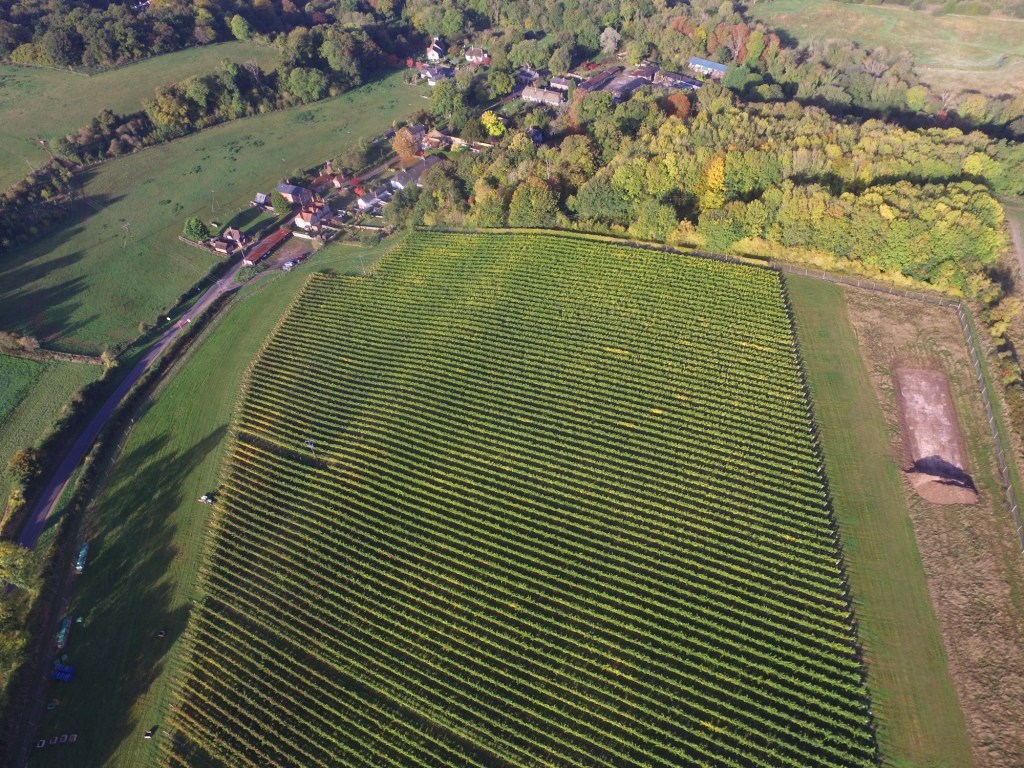
In 2009 Waitrose became the first UK Supermarket to plant its own vineyard on the Leckford Estate. The site selected was a 4.7-hectare chalky field with south-facing slopes, previously used for rotational agriculture, on the left-hand side of Winchester Street coming out of Leckford village.
Stephen Skelton MW, the godfather of the English Wine industry who planted the vines that would later become Chapel Down vineyard in Kent was the viticultural consultant who selected the vines of the three classic Champagne grape varieties: Chardonnay, Pinot Noir and Pinot Meunier to be planted, transforming the vision into a reality.
In 2017 they planted a second (new) vineyard on the higher ground above the old vineyard doubling their grape growing to extend production of Leckford Estate Brut.
Colin Pratt today’s Fruit Farm Manager was born in Chipping Norton in Oxfordshire. His parents moved to the village and has worked raising fruit on the estate since 1996. He was a member of the team tasked with planting the vines in immaculate straight lines in the soil. He recalls that grapes were added to the Estates fruit portfolio, no vineyard training as such, just told to go and plant what was needed.
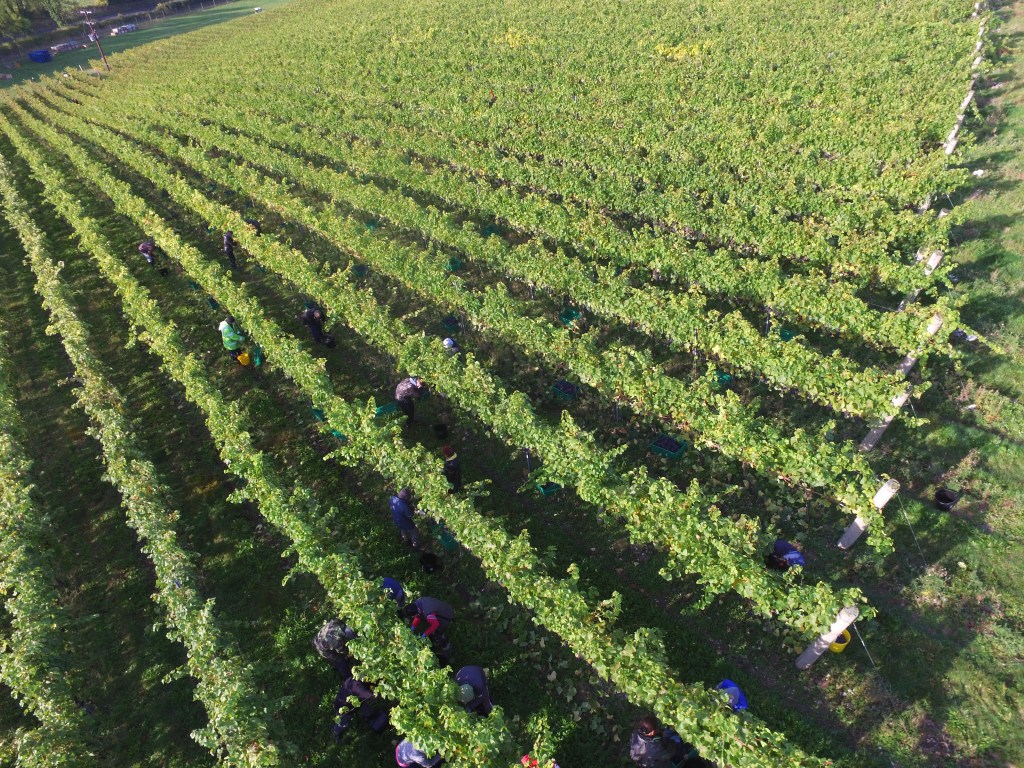
The first harvest in 2011, the year the Leckford Estate became part Waitrose, there was a predictably small tonnage of grapes but enough of Ridgeview to make 2,500 bottles of sparkling white wine. Leckford Estate Brut.
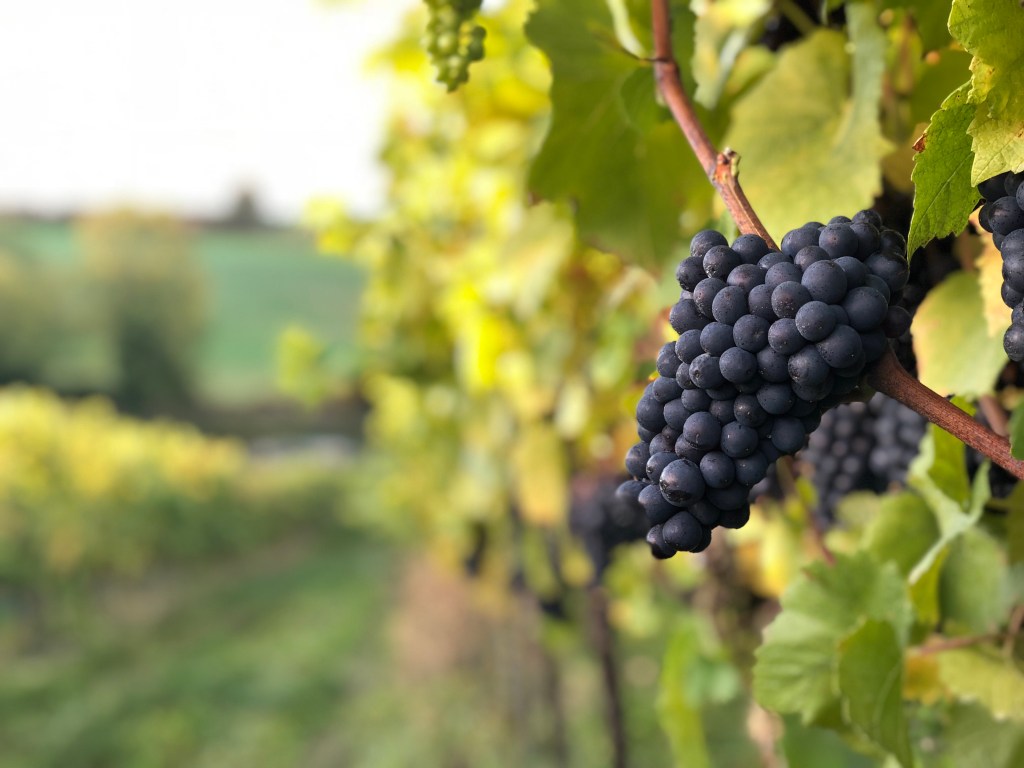
“Generally, the quality of the grapes harvested over the years has been very good to excellent,” says Colin. “The exception was this year. Some of the Pinot Meunier attracted quite lots of wasps, who took it upon themselves to start nibbling the bunches which led to mould forming on some of the bunches, and as a result saw us discard around 40% of this variety in the new planting. The old planting was safely picked before this became an issue.”
Frost is the f word of growing grapes. 2017 was showing all the signs of being a good harvest until there were four nights 2017 -4C. Despite being pro-active with burning candles through the night 40% of the fruit was lost.
“This year saw some of the upper canopy affected by downy mildew,” he says. “This was a result of July and August being warm and wet, leading to high disease pressure. Timely intervention with crop protection products helped to keep the disease largely at bay and prevent it spreading to the grapes hanging lower down on the vine. Having spoken to workers who had worked in other vineyards, there were tales of disasters aplenty. Tales of growers not being as proactive with the sprayer as myself, leading to huge losses of grapes at harvest time. Workers literally just cutting the bunches off the vine and dropping them on the ground to speed up decomposition and therefore not allowing the disease to hang too close to the vines.”
“If there are no problems in the second and third weeks of May,” Colin adds, “the indications are that it’s going to be a good harvest.
Ridgeview their winemakers are on hand to advise. Matt Strugnell their director or Vineyards will visit during the season and as harvest approaches, Colin and Simon Roberts, their Director of Winemaking do talk about the season, weather forecasts, fruit analysis and harvesting. Colin’s estimate is it’s an exchange of 50 to 60 emails.
During the harvest Ridgeview will tell Colin daily which grapes from which blocks to pick. At the end of each day, he needs to send either four or eight tonnes of picked grapes for the next days pressing.
The downside of Brexit to the agricultural community is that there are currently only 40% of the earlier Eastern European grape pickers coming to the UK. The local labour markets aren’t that enthusiastic about going out into the field “Picker availability coupled with inclement weather saw this year’s harvest take around five days longer to finish than we would normally expect,” Colin concludes. “Hopefully going forward, with the use of mechanized harvesting, labour shouldn’t be of the same concern as it was this year.”
Colin’s vineyard year concludes when the last lorry of freshly picked grapes leaves Leckford to Ridgeview for Simon to crush the beautiful grapes and go through the three-year process of resting on the yeast lees to allow the complex, biscuity aromas and flavours to evolve.
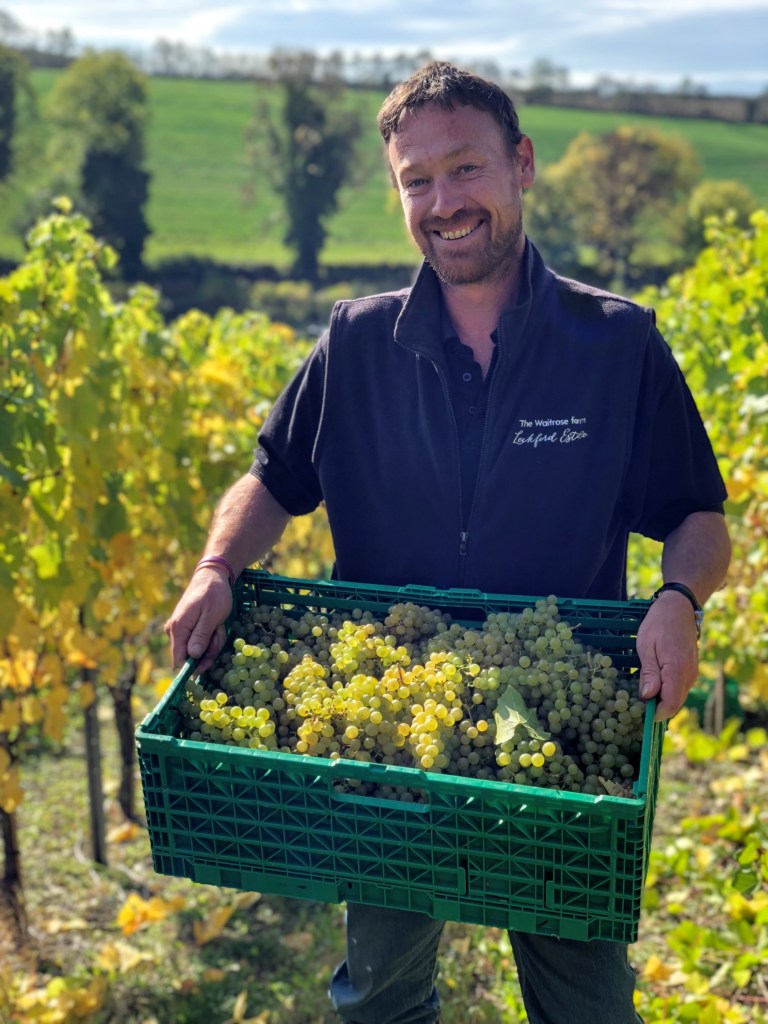
“All the Leckford Sparkling wines are vintage,” says Simon, “although we do use a little reserve wine each year, for complexity and consistency. Alexandra Mawson is the Buyer for Waitrose and I blend the Leckford Brut together and advises on the Ridgeview blend for Waitrose.”
“We only make Blanc de Blancs when the Chardonnay is exceptional,” he says. “Leckford have made three, 2014, 2015 and 2018. The year 2018 was a very bumper harvest for Leckford with a very warm summer, it was called a harvest of a lifetime.”
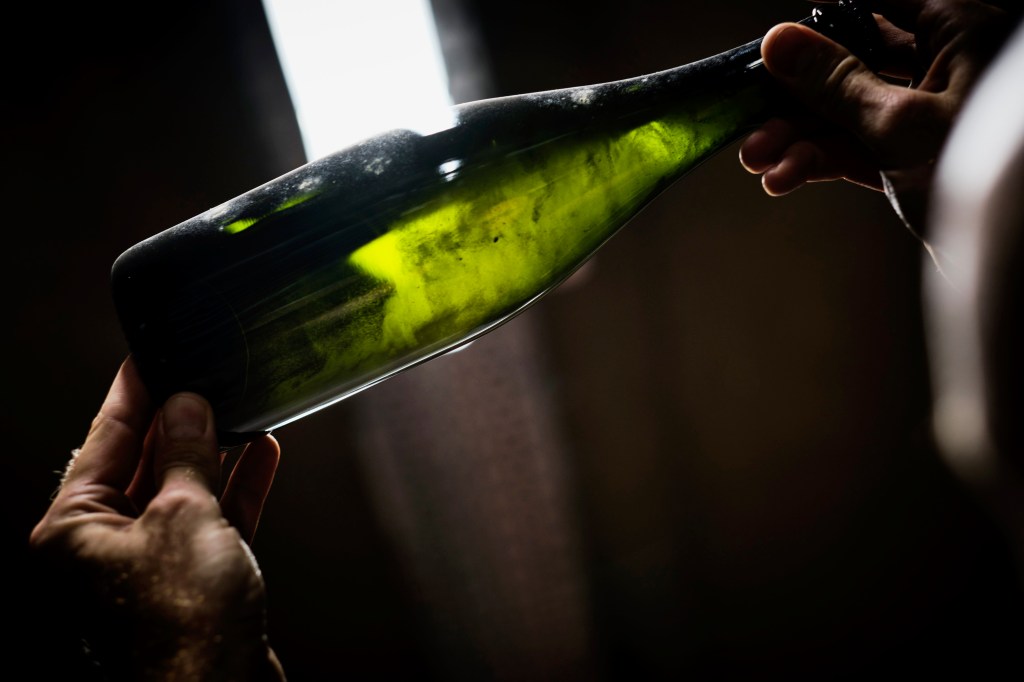
“I do like the Leckford site, they have their own microclimate and do consistently produce good fruit,” he says. “Leckford have a keen eye for the detail and a passion for producing the best produce they can, and the vines are no different. There is a long tradition at Leckford of being respectful guardian of the land and this shows in the harvest and the result in the wine.”
“Leckford wines age well,” he says, “aged on lees for 3 years creates a good harmony between the fruit profile and the autolysis, still fresh and fruit driven with the added complexity of time in the cellar. As for extended aging, Leckford do not keep wines back. But I feel they would age well, the style of Leckford in very fruit driven, and complements the characteristics that come with aging.”
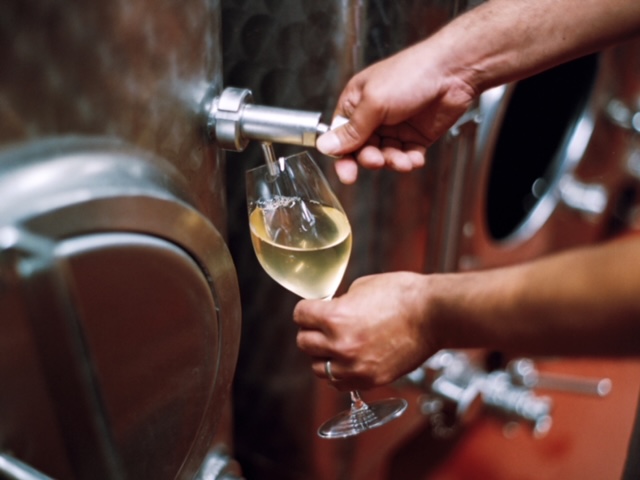
“Leckford bottles are stored at Ridgeview in dedicated underground cellars,” he concludes, “after they are disgorged, they are aged on cork for three months before being shipped to Waitrose main distribution facility.”
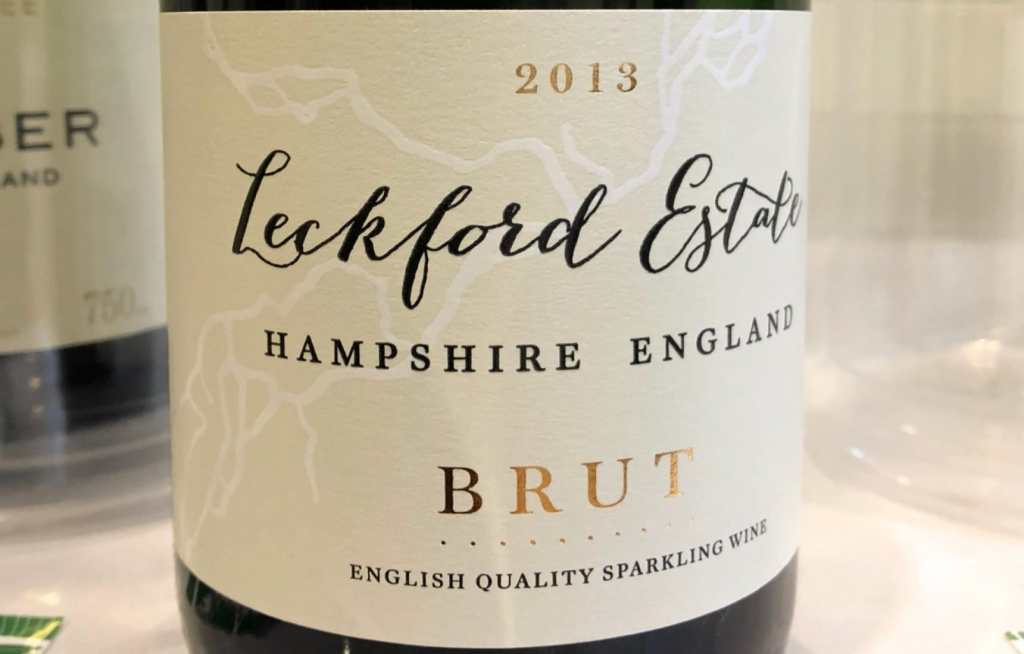
The wine label defines the visible image of the wine inside the bottle. The launch label hand the elegance of a handwritten note on white paper written by a fountain pen in black.
In late 2020 it changed to the current gold and black style used since the 2016 vintage.
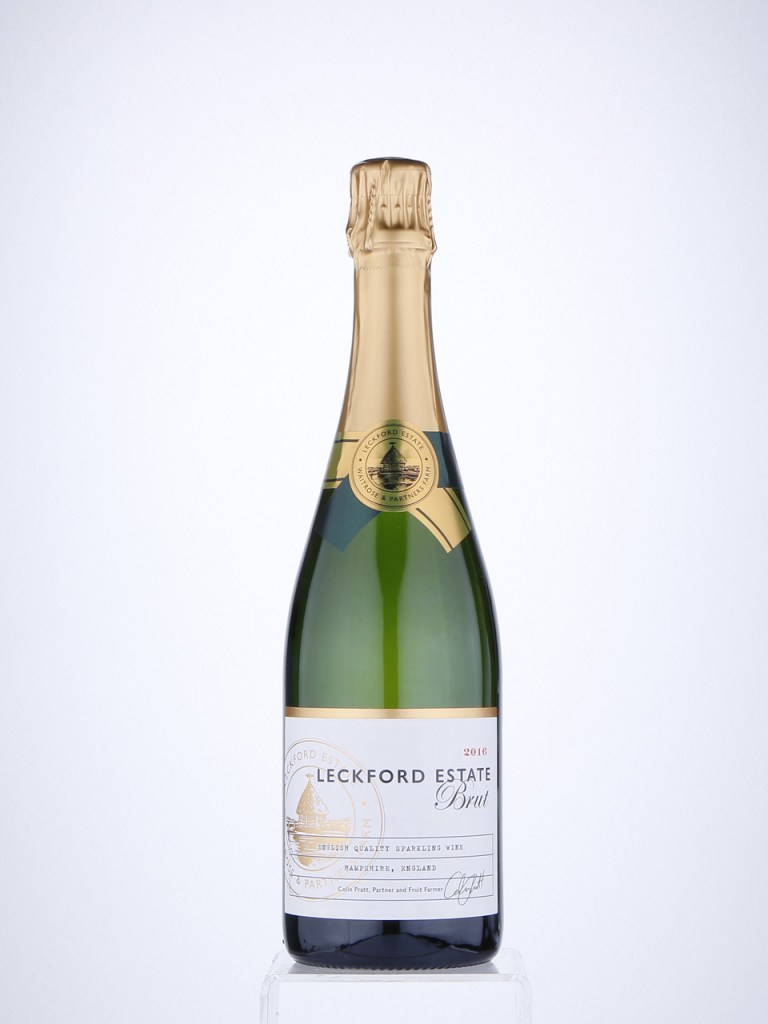
Beautiful elegantly crisp sparkling wines made from the finest grapes grown almost unnoticed in Leckford village. Time to open a bottle to celebrate their achievement.


Leave a comment